
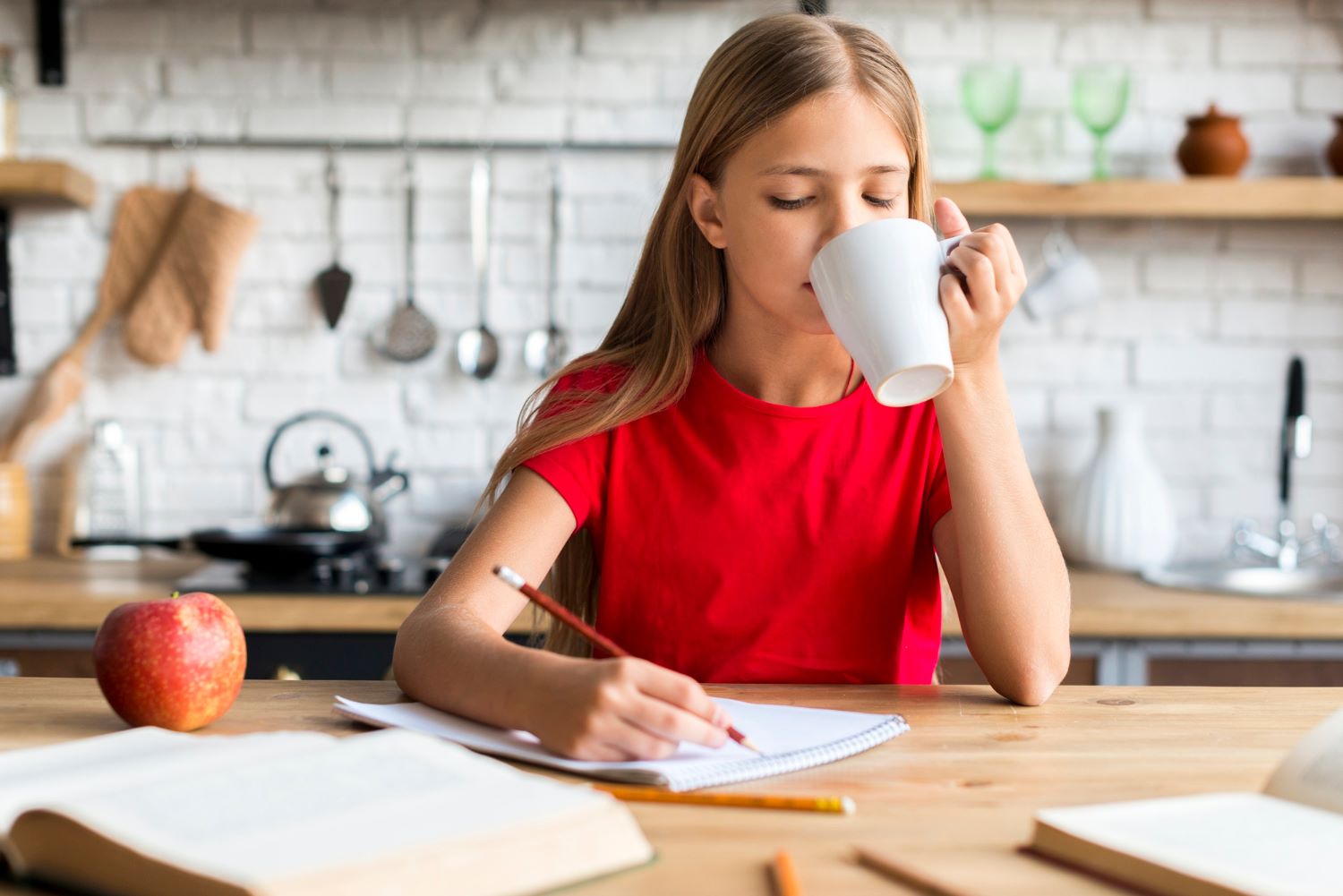
Exam season is stressful for all teenagers, but for teenage girls, there is another layer we rarely talk about: hormones.
Girls are not the same every day of the month. Mood, energy, motivation, sleep, pain levels, appetite and confidence can all shift throughout the menstrual cycle.
This is not a weakness.
It is not “drama”.
It is biology.
And more than that, these hormones are not simply a problem to manage. They can also be superpowers.
The Hormonal “Superpower” Phase
In the first half of the menstrual cycle, after a period and leading up to ovulation, rising oestrogen can bring more energy, clearer thinking, improved motivation and greater confidence.
Many girls may find this is the time when revision feels easier, ideas flow more quickly, and they feel more capable of tackling difficult subjects or practice papers.
This phase can be an excellent time for:
- Learning new information
- Revising harder subjects
- Planning and organising
- Building momentum and confidence
- Taking on bigger challenges
Yet very few girls are ever taught this.
Why Everything Can Suddenly Feel Harder
After ovulation, and especially in the days before a period, hormone levels begin to shift and eventually drop. For some girls, this can affect:
- Mood
- Sleep
- Pain levels
- Motivation
- Concentration
- Stress tolerance
- Emotional resilience
Hormones and mental health are closely connected. Oestrogen and progesterone influence brain chemicals involved in mood, focus, sleep and stress response.
This means some girls may feel calm, confident and emotionally steady at certain points of the month, and far more anxious, tearful, irritable or overwhelmed at others.
This is not “being dramatic”. It is biology.
And for girls already under exam pressure, those hormonal shifts can feel even more intense.
A girl who was coping perfectly well last week may suddenly feel exhausted, emotional or unable to concentrate. She may doubt herself. She may feel as if she has forgotten everything. Revision that once felt manageable can suddenly feel overwhelming.
That does not mean she is lazy.
It does not mean she has not worked hard.
And it does not mean she is making excuses.
It may simply mean her body is under more pressure.
Exam Timetables Don’t Account for Hormones
For some girls, exams will fall at the most difficult point in their cycle.
I have seen this first-hand with my own daughter. She had exams right at the end of her cycle, just before her period. She had worked incredibly hard, but I could see how much harder everything felt for her at that point in the month.
The preparation was there.
The effort was there.
But her body was not giving her the same energy, focus or emotional resilience she had earlier in the month.
And this is what we need to teach girls:
not that their hormones are a problem, but that their bodies have patterns.
Why Cycle Awareness Matters
When girls understand those patterns, they stop blaming themselves.
They begin to recognise:
- When they are likely to feel more focused and energised
- When they may need more rest and support
- Why motivation can fluctuate
- Why confidence sometimes changes
- Why stress can feel harder to manage at certain times
This knowledge is powerful.
It helps girls understand that motivation is not always within their control. Sometimes it is chemistry.
Confidence is not always fixed. Sometimes it fluctuates.
Energy is not always about effort. Sometimes it is hormonal, nutritional and physical.
Of course, girls can still perform well at any point in their cycle. But we need to stop expecting them to feel exactly the same every single day of the month.
Teenage Girls Need Better Education Around Hormones
The menstrual cycle is not just about periods.
It is connected to:
- The brain
- The nervous system
- Sleep
- Appetite
- Emotions
- Energy
- Stress resilience
- Mental wellbeing
Imagine how different it would feel for a girl to think:
“I am not failing. I am just in the harder part of my cycle.”
Or:
“This is the week I usually feel more emotional, so I need to be kinder to myself.”
Or:
“This is when I usually feel more energised, so I will use this time well.”
That is not an excuse.
It is self-awareness.
And self-awareness is one of the most valuable things we can give our daughters.
Supporting Girls During Exam Season
During exam season, teenage girls do not just need revision timetables and reminders to work harder.
They need adults who understand that what is happening in their bodies matters too.
Their hormones are not a weakness.
They are part of their rhythm, their intuition, their energy, their creativity, and their ability to tune in to themselves.
The more we help girls understand their bodies, the less likely they are to see themselves as unpredictable, difficult or broken.
And the more they can learn to work with their biology, rather than fight against it.
Final Thoughts
Our daughters deserve to understand their bodies, not feel ruled by them.
If your daughter is struggling with fatigue, mood swings, cravings, painful periods or exam-time anxiety, there may be nutritional, hormonal or blood sugar factors worth exploring.
As a Registered Nutritionist specialising in women’s health and hormones, I support women and families to better understand what may be going on beneath the surface and to put realistic nutrition and lifestyle foundations in place.
BOOK A FREE Call